
Performanceis never improvised.It is earned, on the ground.

From operational friction to strategic challenges, our experts work alongside you to turn your challenges into practical solutions and your ambitions into measurable results.

EXPERTISE / CORESYSTEM OPERATIONAL
  1. 01Industrial engineeringLOADED
  2. 02Project managementLOADED
  3. 03Operational excellenceLOADED
ScaleUP! — Industrial expertise

One expertise,4 performance levers.

ScaleUP! FIELD

Operational Performance
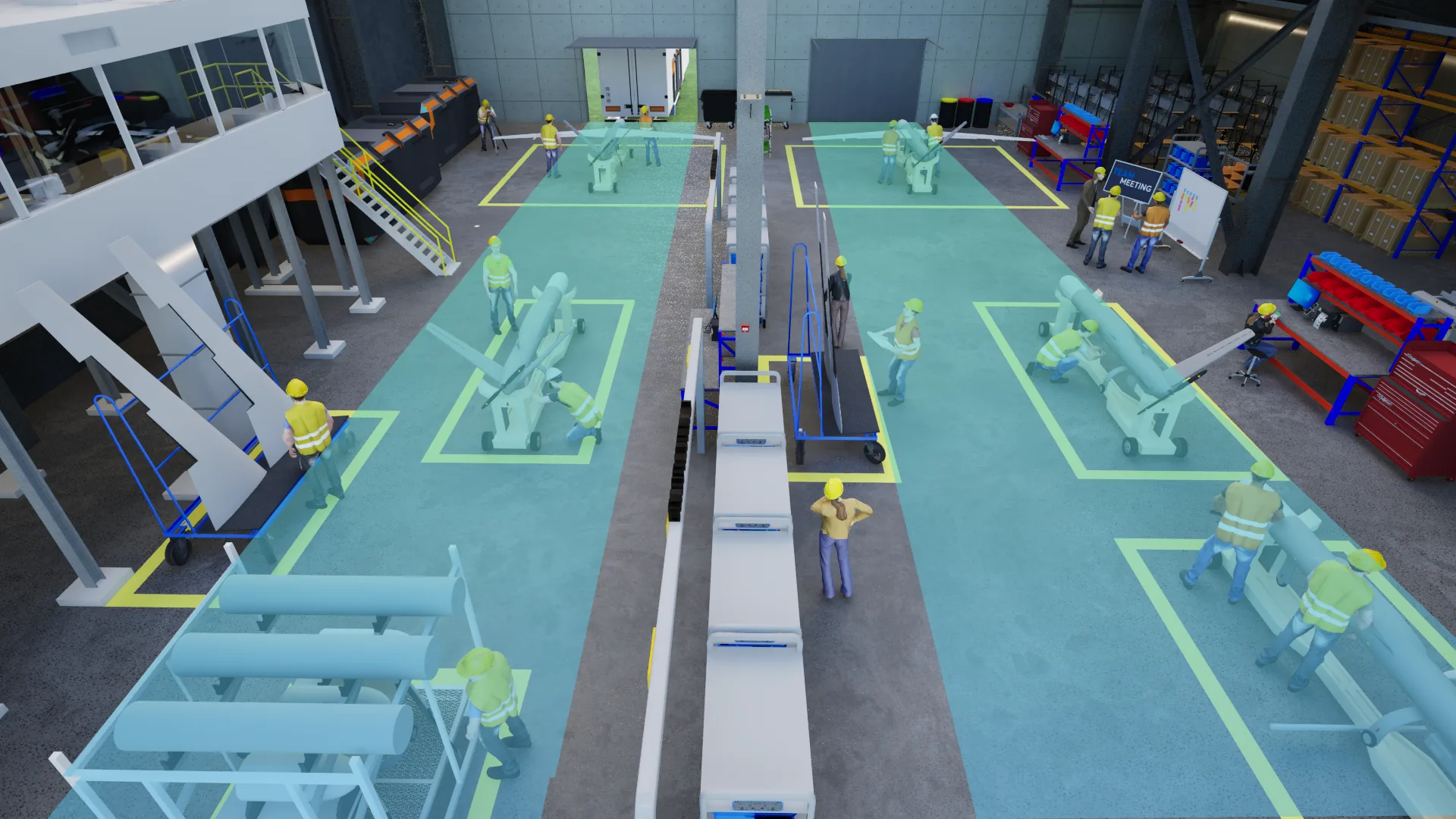
Observed situationPotential unlocked
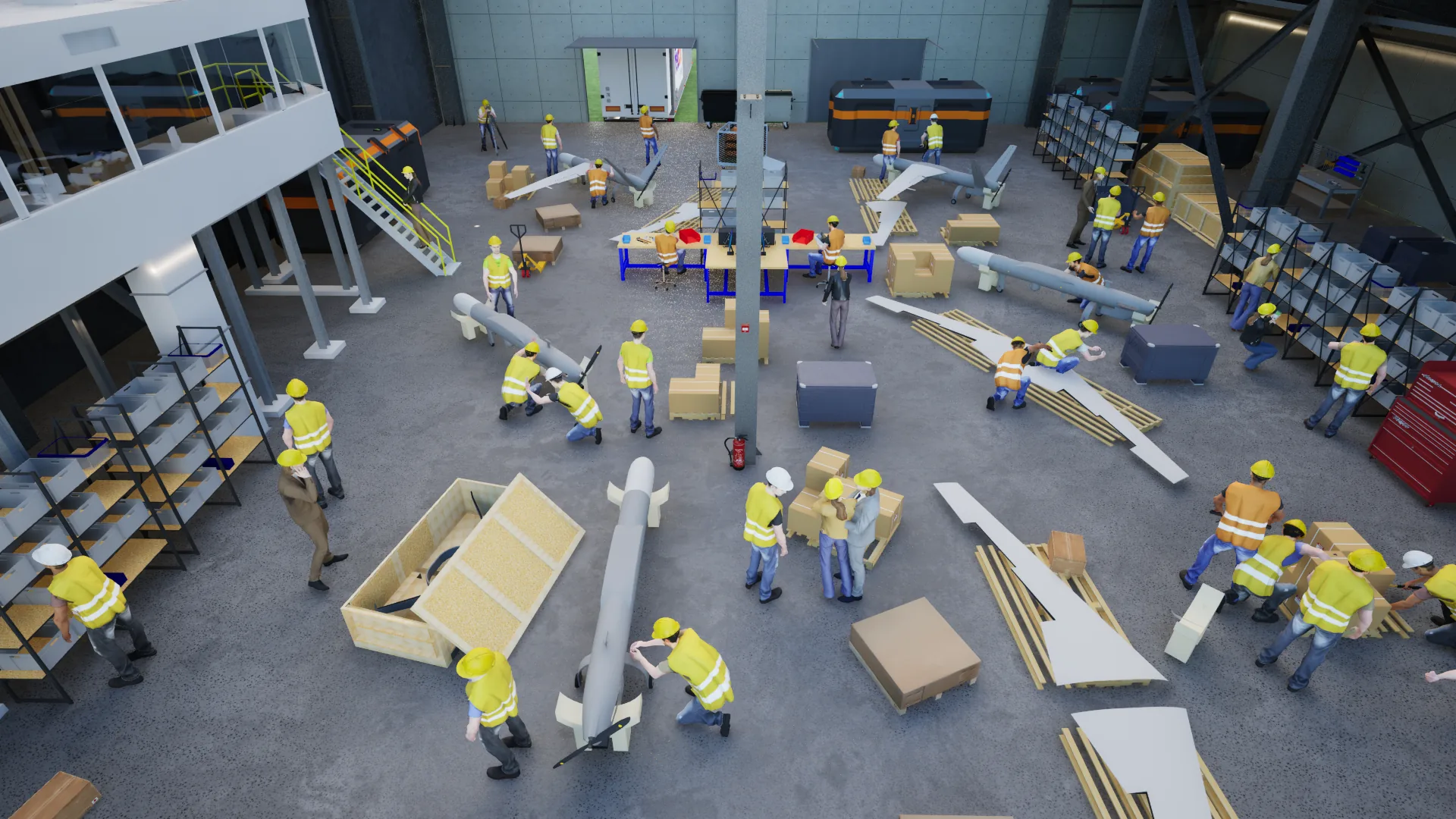
Unlock the potential of what you already have

Our role

We analyse your operations on site, then work with your teams to understand stoppages, unused capacity and difficult flows.

Expected outcomes

  • Prioritised actions
  • Better use of existing resources
  • Smoother flows
  • Measurable gains

ScaleUP! VISION

Industrial Transformation Design
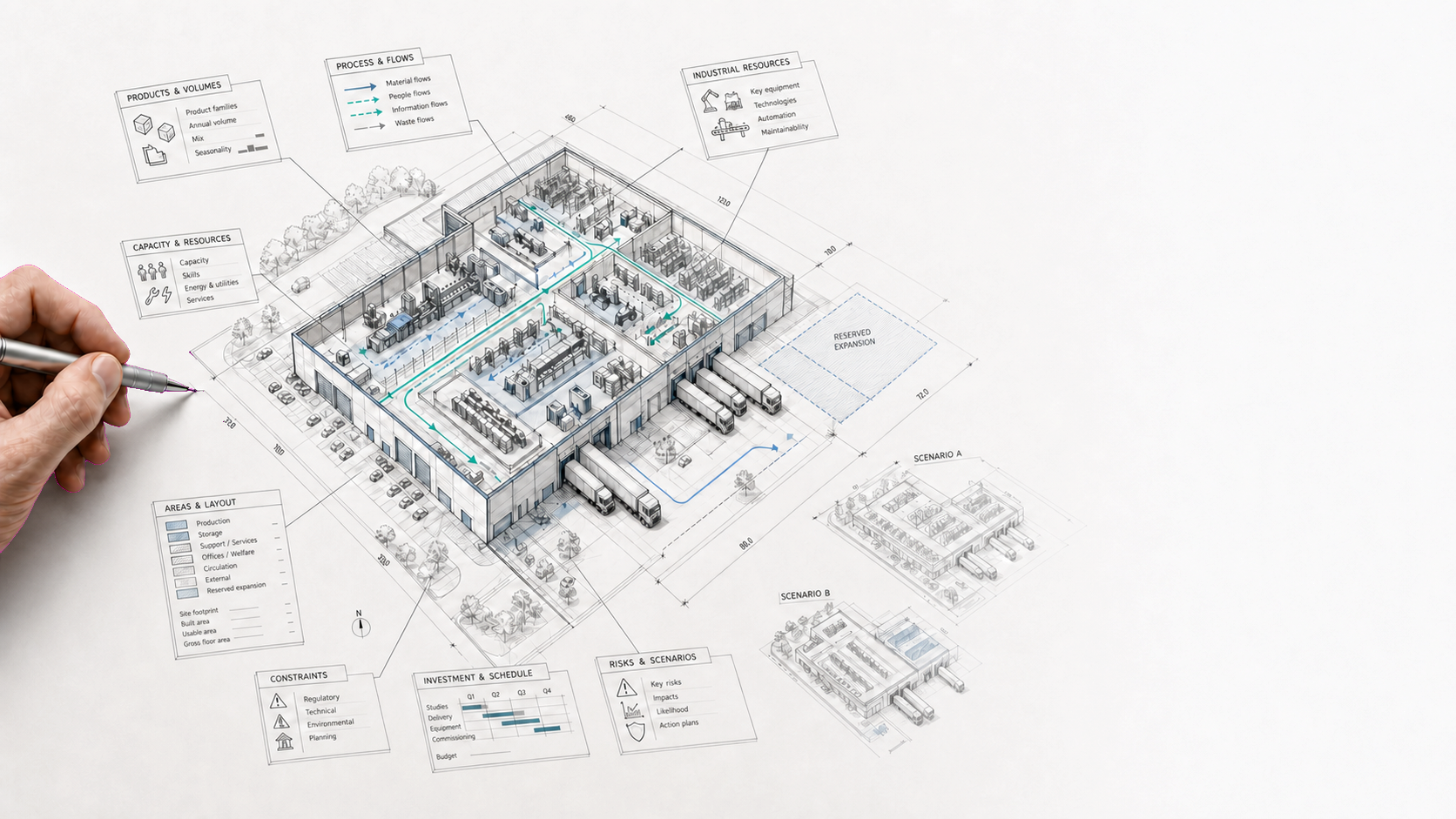
Industrial master plan projection

Your industrial ambition, assessed, projected and costed.

Our role

We design and cost several scenarios for a new line, an industrial transfer, a ramp-up or a site change.

Expected outcomes

  • Comparable options
  • Clearer costs and risks
  • Better-informed decisions
  • A roadmap for action

ScaleUP! IMPACT

Transformation Delivery

No outstanding issues between ambition and delivery.

Our role

We support delivery of your industrial project: specifications, supplier selection, implementation, acceptance and start-up.

Expected outcomes

  • A better managed project
  • Deviations spotted earlier
  • A prepared start-up
  • Results tracked

ScaleUP! STUDIO

3D Modelling & Prototyping

Give your project a visible, testable and compelling form.

Our role

We create UX/UI prototypes, 3D models and visualisations so you can see and test the project before it is built.

Expected outcomes

  • See before committing
  • Test uses and alternatives
  • Explain the project to teams
  • Present concrete options

3 engagement contexts. One standard.

Expertise available directly or alongside your teams.

Manufacturers

Move a practical issue forward.

Our experts focus fully on it — with the on-site experience and commitment it requires.

Small businesses, SMEs, mid-caps and large-group sites

Service companies

Complete a team at the right time.

The industrial expertise you need, when you need it. A clear contribution integrated into your organisation without friction.

A clear contribution integrated into your organisation

Integrators

Connect the solution to the ground and its users.

Usage analysis, deployment support and the on-site reality the solution alone cannot capture. A targeted contribution integrated into your scope.

Complementing your expertise without blurring responsibilities

A transformation built with the people on the ground

ScaleUP!

Our approach begins on the ground and involves your teams at every stage.

Industrial transformation rarely starts in a spreadsheet.

It starts on the ground, with the people who know it best.

We listen, observe and build with your teams.

To turn those findings into lasting performance.

Your reality is the best place to start.

Industrial maturity assessment

The levers behindyour performance.

Make your reality visible. So you know where to move next.

The assessment brings together your practices, challenges and context to reveal your strengths, vulnerabilities and priority for progress.

Example results

Your cross-functional industrial profile

Your profile will be built from your answers.
Operational control
Resource resilience
System flow
Decision quality
Team engagement
Adaptability
Your priority leverA clearly identified action priority
Recommended directionFIELD · VISION · IMPACT
Let’s begin on the ground.1 of 6
Flows
Production
Quality

Knowing when to challenge the obvious

AI, Lean, OEE, safety or industrial systems: we distinguish what works, what has changed and what reality on the ground forces us to reconsider.

Scroll through the topics

Industrial analysis Artificial intelligence

Can AI fulfil the promises of Industry 4.0?

AI can fulfil some of the promises of Industry 4.0, but not by simply adding another technology. Industry 4.0 multiplied sensors, data and dashboards without always making decisions easier. AI can provide the missing link between that information and the industrial process: build more relevant indicators, connect scattered data, explain a variation and highlight what deserves attention. It can also detect weak signals and estimate the risk of breakdown, quality drift, delay or shortage early enough to act. Its value is not limited to prediction. It can reduce the time spent producing, checking and interpreting information, leaving more time for decisions and action. The potential becomes real when the outcome improves a measurable decision or operation.
In a ScaleUP! project

Should you take the step? Yes, provided you begin with a practical challenge rather than the technology. Whatever the company’s size or the site’s digital maturity, the available data and on-site knowledge may be enough to examine a first use case. The scope and resources must remain proportionate to the expected gains. At IOI, we value technology and understand its potential. Our pragmatism is precisely why we do not put it everywhere: we use it when it genuinely improves a decision, process or operation.

AI and machine learning for manufacturing — NIST

Industrial analysis Operational excellence

Is Lean management still suited to industry in 2026?

Lean remains relevant in 2026 when it starts from real work to serve the customer better: making problems visible, improving flow, reducing waiting, rework and non-value-added tasks, then learning with the teams. What is outdated is applying it mechanically: deploying the same tools everywhere, optimising each workstation at the expense of overall flow or confusing progress with the permanent removal of resources. Lean has sometimes improved indicators by intensifying work, eliminating all margins or imposing standards without listening to the people who run the process. Waste then disappeared from the dashboard only to be transferred to human effort. That is neither sustainable nor compatible with Industry 5.0. Performance must also preserve skills, autonomy and the system’s ability to absorb the unexpected. Digital tools and AI do not replace Lean; they can help it observe complex flows, identify drift sooner and test scenarios before acting.
In a ScaleUP! project

In a ScaleUP! project, Lean provides a clear and effective basis for observing work, revealing problems and improving flows with the people who operate them. Depending on the issue, we may add systems analysis, mind mapping, UX approaches and user stories to clarify uses, or agile methods to test and learn in stages. We adapt the method, pace and materials to the teams and individuals involved. The goal is not to stack methods, but to choose those that genuinely help people understand, decide and transform.

Lean, digital technology and continuous improvement — NIST

Industrial analysis Prevention

Industrial risk prevention: must safety and performance be traded off?

No. Well-designed prevention protects people and makes the process more reliable. It becomes costly when considered too late: difficult maintenance access, poorly designed circulation, forgotten degraded modes or safeguards added after installation. Overprotection often follows a rapid response to an incident, near miss or legitimate concern. Emotion demands action, but it does not always reveal the cause. Without analysis, another rule, approval or barrier may reassure without controlling the risk more effectively. Redundant measures disconnected from real work create cost, frustration and sometimes workarounds. Safety requirements and regulations are non-negotiable. Effective prevention nevertheless seeks to remove the hazard at source, then implement the most robust protection suited to the real risk. Its quality is measured by lasting protection in production, maintenance and foreseeable situations, not by the number of devices added.
In a ScaleUP! project

In a ScaleUP! project, we integrate prevention from the scoping stage by comparing risk analysis with real uses and regulatory requirements. With the teams, we first seek to eliminate or reduce the hazard at source, then implement simple, robust and understandable safeguards. The aim is never to reduce safety, but to prevent poorly designed safety from creating new difficulties without protecting people better.

Prevention through design — INRS

Industrial analysis Industrial performance

Does OEE truly measure industrial performance?

OEE can rise while the factory delivers less effectively. Overall equipment effectiveness measures the efficiency of a production asset while it is required, not the performance of the whole industrial system. It combines availability, performance and quality to reveal losses from stoppages, slowdowns and defects, which makes it useful. But its apparent precision can mislead. The result depends on the chosen time base, reference rate and way stoppages are reported. It does not show whether the asset is the real bottleneck, whether output meets customer demand, whether inventory is growing or whether performance relies on excessive pressure on teams. Used as an isolated target, OEE may even encourage production where the flow does not need it. Systems analysis therefore checks whether a local improvement genuinely improves overall flow or merely moves the constraint elsewhere. OEE answers the question it is asked; the essential task is choosing the right question and making the calculation rules visible.
In a ScaleUP! project

In a ScaleUP! project, we use OEE to locate and understand losses, never as an absolute score for the factory. We verify how it is calculated, break it down and compare it with flow, lead times, quality, inventory and the reality experienced by teams. The aim is not the best-looking percentage, but the improvement that produces a real effect on industrial performance.

OEE definition — NF E60-182 standard, AFNOR

Industrial analysis Industrial strategy

Why does an industrial master plan end up in a drawer?

A master plan rarely ends up in a drawer because the drawings are poor. It does so when it depicts an ideal factory before the need has been sufficiently qualified: target markets, volumes, product mix, constraints, skills, expected performance and the problems to solve. A single target creates certainty while hiding the assumptions on which its relevance depends. A robust master plan studies several scenarios on a shared, explicit basis. It compares investment, operating costs, gains, lead times, risks and retained flexibility. ROI is not a number added at the end to defend a preferred option; it supports trade-offs through visible assumptions and sensitivity to changes in volume, schedule or ramp-up. For each assumption, the plan states what is known, what remains uncertain and how a deviation would affect the scenario. The company can then decide what to commit, size, reserve or postpone — and revisit the choice when the environment or on-site results challenge an assumption.
In a ScaleUP! project

In a ScaleUP! project, we qualify the need, ambitions and constraints before drawing the target. Maps, flow representations and quantified comparisons provide the basis for several scenarios and for comparing their ROI, risks, schedule and retained flexibility. When the project needs to feel tangible, ScaleUP! STUDIO turns these results into an immersive presentation: 3D visualisation, animation or an interactive experience helps teams and decision-makers project themselves into a future site, tool or application.

Industrial analysis Information systems

ERP, MES, CMMS and WMS are all in place. Why is that not enough?

A factory can have an ERP, MES, CMMS and WMS and still search for information or re-enter the same data. These systems are not competitors. ERP plans resources, orders, purchasing and costs. MES tracks execution and production traceability. CMMS manages equipment and maintenance work. WMS manages physical warehouse operations and inventory movements. Their functions can overlap, so the real issue is defining which system is authoritative and when responsibility passes to another. Without clearly defined triggers and data, information is lost or duplicated between tools. Excel often fills the gaps by combining extracts, calculating KPIs and building dashboards. That flexibility is useful, but several files can produce different definitions of the same indicator. Before replacing a spreadsheet or adding software, it is necessary to understand the function it fulfils, the authoritative data and the decision it must support.
In a ScaleUP! project

In a ScaleUP! project, we begin with processes and decisions before comparing software. IOI developed Data Stream Mapping (DSM), a method inspired by VSM that follows data from creation to the decision it must support. It reveals waiting, duplicate entry, duplication, lost context, transfers of responsibility and areas where information is missing, late, contradictory or has no clear owner. The analysis may lead to completing, connecting or simplifying what already exists.

For complete transparency, IOI is also the publisher of UP! Industrial Suite. It grew from a reality seen on the ground: between specialist systems, teams still often need to search for or reconstruct the context required to act.

UP! Industrial Suite is positioned as an IPES — Industrial Process Execution System. Without replacing other systems, an IPES connects useful information to the process, task and person concerned. In a ScaleUP! engagement, it is never an automatic conclusion of DSM. It may be proposed if the analysis demonstrates its value, like any other response.

Integration between management systems and industrial operations — ISA-95

Industrial analysis Digital tools

Can vibe coding replace Excel in industry?

Vibe coding can replace some Excel files with small applications created with AI assistance. Many spreadsheets are already handmade applications: they bring data together, apply rules, calculate KPIs, organise schedules or support approvals. AI can quickly turn that need into a clearer interface, input controls, notifications or smartphone access. The gain can be real when testing an idea or simplifying local use. But an application that looks professional is not necessarily ready for industry. Its code may be poorly understood, access rights incomplete, data insufficiently protected and maintenance dependent on the person who wrote the prompts. An isolated spreadsheet may then become less visible shadow IT: several small applications connected to company data with no owner or defined lifecycle. The real question is not only whether the application can be built, but who validates, maintains and remains accountable for it once work depends on it.
In a ScaleUP! project

In a ScaleUP! project, we can use vibe coding to make an idea testable quickly. As soon as an application carries a KPI or decision, serves several users, handles sensitive data or supports production, its status must change. Requirements, business rules, access, tests, security, ownership and maintenance must be clarified before operational use. At IOI, we value the speed these technologies enable; we do not confuse it with industrial reliability.

Risks in AI-generated code — OWASP Top 10:2025

Industrial analysis Industrial transformation

What is Industry 5.0?

Industry 5.0 extends Industry 4.0 by placing technology at the service of three priorities: people, sustainability and resilience. It is not simply a more automated or connected factory, but an industry able to combine performance, conditions of use and adaptability.
In a ScaleUP! project

These dimensions become design and decision criteria when relevant to the situation studied: team practices and skills, the resilience of the industrial system and the lasting consequences of the choices considered.

Industry 5.0 definition — European Commission

Industrial analysis Analysis methods

Why does industrial systems analysis look beyond the symptom?

A workshop is falling behind: should the apparently saturated station run faster? Perhaps. But if the source lies in variable supply, release rules, quality checks or information flow, speeding up that station may mainly create more work in progress and move the constraint. In an industrial system, the most visible effect does not always appear where the problem begins. Systems analysis broadens the view to the interactions between products, flows, processes, resources, data, organisation, decisions and teams. It does not make everything complex; it defines the scope needed to understand causes, test assumptions and anticipate the effects of a decision. An improvement is genuinely useful only if it strengthens overall performance without transferring lead time, workload, risk or cost elsewhere.
In a ScaleUP! project

In a ScaleUP! project, we begin with the symptom without confusing it with the diagnosis. Observations on the ground, data and team experience help reconstruct cause-and-effect relationships, then compare the local and overall consequences of possible solutions. The aim is simple: act where the effect will last, not only where the problem is most visible.

Before you begin

Your situation does not need to be perfect or completely defined before we start.

Questions you may be asking

Understanding our approach

Expertise built on the ground.

Behind ScaleUP! is a team of professionals, each with more than fifteen years of experience in industrial operations, engineering and project delivery.

Industrial sectors

From aerospace to emerging sectors.

Our expertise

Strategy, processes and operations.

Our experience

More than 15 years at the heart of industry.

Experience across several industrial worlds

Our teams built their experience in sectors where an industrial decision affects quality, lead times, investment and sometimes the continuity of operations itself. This knowledge helps them understand your constraints and the specific requirements of your environment more quickly.

Aeronautics
Traceability, quality and ramp-up.

Our experts have worked in environments where every operation must be controlled, documented and repeatable. That experience helps connect performance, quality requirements, industrial flows and the ability to sustain output rates.

Space
Critical operations, complex parts and demanding requirements.

Our teams understand projects where high-value operations must be secured, often in small batches or as one-offs. This experience creates particular attention to risks, interfaces and validation of industrial choices.

Defence
Sovereignty, small batches and long lifecycles.

Our teams have worked in environments where industrial decisions must account for resource availability, data control, security requirements and equipment lifecycles.

Energy
Critical installations, continuity and planned shutdowns.

Our teams bring a strong culture of safety, business continuity and intervention readiness. They know how to address equipment, flows, maintenance and operating constraints together.

Naval
Long programmes, concurrent work and constrained spaces.

Our teams understand programmes that combine long cycles, many trades and strong access or layout constraints. They know how to analyse interfaces, flows and concurrent activities.

Emerging sectors
Hydrogen, batteries and scaling up.

Our teams support situations where industrialisation must progress while products, processes and volumes are still evolving. They build progressive scenarios and test assumptions before the industrial system is fixed.

Expertise brought together around one issue

The expertise within our teams allows us to examine an issue as a whole: what happens on the ground, what structures the flows, what prepares the future and what enables decisions.

Strategy & design

Our teams clarify the need, make the situation objective and build scenarios that support a realistic industrial roadmap.

  • Scoping and assessment
  • Systems analysis
  • Industrial scenarios
  • Master plan and roadmap
Processes & organisation

Our teams analyse how work moves between roles, decisions and tools to simplify interfaces and make the organisation more resilient.

  • Process analysis and optimisation
  • Roles and responsibilities
  • Standards and operating procedures
  • Governance and management
Operations

Our teams understand and improve how a site produces, controls, maintains and manages its day-to-day activity.

  • Production
  • Operational performance
  • Maintenance and quality
  • Operational excellence
Flows

Our teams connect supply, work in progress, capacity and lead times to make flows more predictable and resilient.

  • Supply chain
  • Planning
  • Industrial logistics
Industrialisation

Our teams turn a need, product or capacity ambition into a coherent, deliverable industrial system.

  • Industrial methods
  • Capacity and layouts
  • Industrial system design
Projects & digital

Our teams secure decisions, coordinate delivery and use data or simulation when they genuinely inform the choice.

  • Project management and owner’s engineering
  • Data and digital transformation
  • Modelling, simulation and 3D

More than 15 years at the heart of industry.

Every professional involved has more than fifteen years of industrial experience. That background gives our teams useful instincts: recognising a familiar situation, asking the right questions sooner and quickly distinguishing a symptom from its cause.

Situations already experienced

Ramp-ups, layout changes, flow difficulties, delayed projects, underused resources or transformations to secure: the team draws on situations encountered throughout previous industrial careers.

A broader perspective

Experience in several sectors makes it possible to compare approaches, identify common principles and share useful practices without imposing a ready-made recipe on your factory.

Operational responsibility

Our experts have held roles in which they had to produce, decide, coordinate and report. They know the difference between an attractive recommendation and a solution that can genuinely be applied.

Direct involvement

The professionals presented for the engagement are the people who deliver it. They take part in observations, analyses, discussions with your teams and the construction of decisions.

The right team for the right issue.

We shape the team around your sector, the question to address and the project’s stage. The experts involved work directly on the engagement; they do not disappear once it begins.

Performance
is built.